Understanding Text to 3D Technology
In recent years, the fusion of artificial intelligence and design technology has led to the rise of a groundbreaking innovation known as Text to 3D. This technology allows users to create intricate three-dimensional models directly from textual descriptions, significantly streamlining the design process. Text to 3D generation harnesses advanced algorithms and machine learning techniques to transform simple phrases into detailed, realistic 3D models, enhancing productivity and creativity across various sectors.
What is Text to 3D?
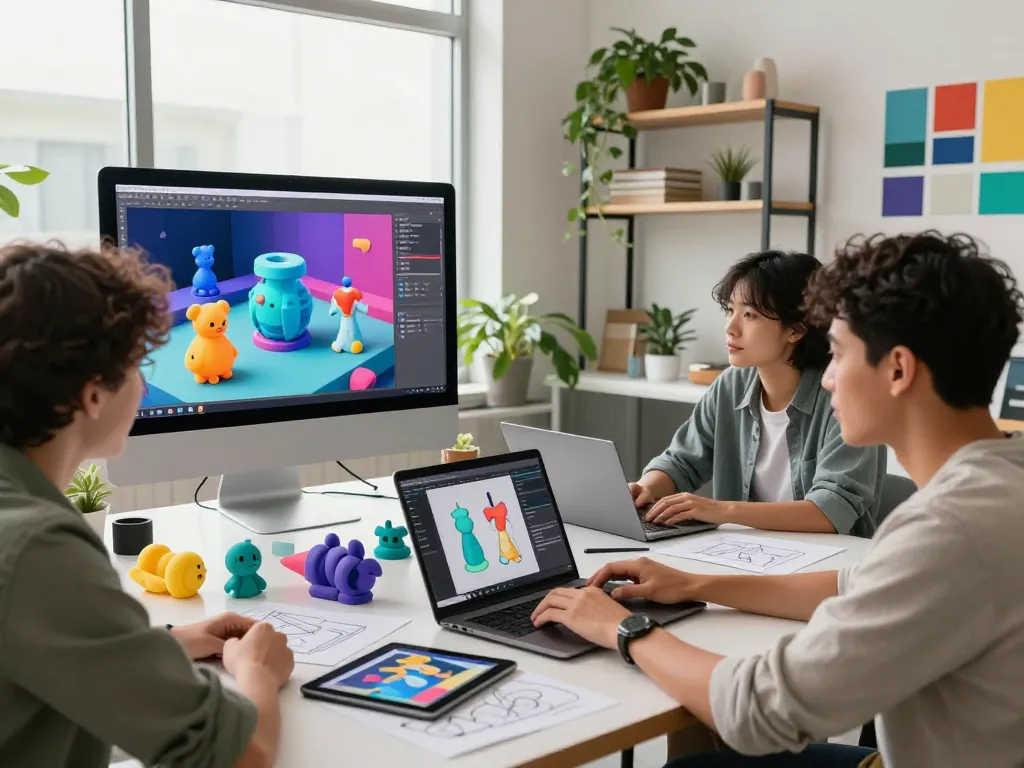
Text to 3D is a form of generative design technology that enables users to produce 3D visualizations and models by inputting plain text descriptions. Instead of relying solely on traditional 3D modeling software, users can describe what they envision, and the AI interprets these descriptions into digital 3D assets. This innovative method opens up new avenues for artists, designers, and engineers who may lack advanced modeling skills but have creative ideas they wish to bring to life.
The Science Behind Text to 3D Generation
At its core, Text to 3D technology uses natural language processing (NLP) and generative adversarial networks (GANs) to create 3D models. The NLP component understands and interprets the user's text input, while the GAN component synthesizes visual representations based on the interpreted data. This synergy allows for an impressive level of detail and accuracy, as the AI can learn from vast databases of existing 3D models and textual descriptions.
Applications Across Various Industries
The applications for Text to 3D technology are vast, impacting numerous industries including gaming, film, architecture, and education. In the gaming and film industries, creators can generate unique assets swiftly, enabling faster prototyping and iteration. Architects can visualize their concepts with real-world context, enhancing their presentations and client communications. In educational settings, Text to 3D can help students understand complex concepts, creating interactive learning experiences.
Benefits of Using Text to 3D in Design
Adopting Text to 3D technology offers a multitude of advantages that can transform design workflows. By harnessing AI-driven generation, designers can unlock new levels of creativity while also optimizing their time and resources.
Enhanced Creativity and Innovation
Text to 3D fuels creativity by enabling designers to experiment with concepts without extensive technical skills. As the AI interprets text and generates models, users can pivot their ideas rapidly, exploring different styles, forms, and functionalities. This freedom fosters an environment where innovation thrives, allowing for the quick realization of abstract concepts.
Time and Cost Efficiency
Traditional 3D modeling can be a time-consuming and costly process, often requiring specialized skills and software. With Text to 3D, the time from concept to creation is significantly reduced, allowing teams to allocate resources more effectively. By eliminating the need for extensive manual modeling, organizations can reduce overhead costs, allowing for a more streamlined budget.
Improved Collaboration Among Teams
Text to 3D also enhances collaboration within teams. By using textual descriptions as the basis for models, team members can contribute ideas without being limited by technical abilities. This inclusivity creates a more diverse pool of ideas, improving the overall quality of design outputs. Furthermore, 3D models generated from text can be easily shared and modified by all team members, fostering a collaborative design ecosystem.
Challenges and Limitations of Text to 3D
While the benefits of Text to 3D are substantial, challenges and limitations exist that must be addressed for the technology to reach its full potential.
Understanding AI Limitations
One of the primary challenges is the limitations inherent in AI technology itself. While Text to 3D can generate impressive models, it may struggle with nuanced details or complex requests. Users must understand the constraints of the AI and may need to refine their prompts for optimal results.
Quality Control in 3D Creations
Another significant concern is quality control. AI-generated models can vary in quality, and without a robust review process, subpar designs may slip through. It is essential for users to implement quality assurance measures, ensuring that the final outputs meet the desired standards.
Managing User Expectations
Lastly, managing user expectations is crucial. As Text to 3D technology evolves, users may expect flawless outputs with minimal effort. Educating users on the capabilities and limitations of the technology is vital for maintaining satisfaction and encouraging realistic goals.
Best Practices for Implementing Text to 3D
To maximize the potential of Text to 3D tools, users should adopt best practices that enhance effectiveness and integration into existing workflows.
Choosing the Right Tools and Software
Selecting the most suitable Text to 3D tool is essential. Various platforms offer different features, from user-friendly interfaces for beginners to advanced options for professionals. Evaluating the specific needs of your projects can guide you to the right choice.
Optimizing Text Prompts for Better Results
The quality of your 3D model heavily depends on how you frame your text prompts. Detailed, specific descriptions yield better results compared to vague or overly broad requests. Experimenting with different phrases can help identify what works best for your intended design.
Integrating with Existing Design Workflows
Integrating Text to 3D capabilities into your current design workflow can enhance productivity. Consider ways to incorporate this technology into your established processes, ensuring a seamless transition and amplifying overall efficiency.
Future of Text to 3D Technology
As we look towards 2026 and beyond, the future of Text to 3D technology appears promising, with several trends and advancements on the horizon.
Trends to Watch for in 2026
Emerging trends will likely include advanced personalization features, allowing users to generate models that are even more tailored to their needs. Additionally, improved algorithms may enable faster and more accurate renderings, enhancing user experience.
The Role of AI in Creative Design
AI's presence in creative design will continue to expand, pushing the boundaries of what is possible. As AI becomes more sophisticated, it may facilitate collaborations between machines and humans, creating a hybrid model of creativity that leverages the strengths of both.
Predictions for the Evolution of 3D Modeling
We can anticipate a significant evolution in 3D modeling practices, transitioning towards more intuitive generative technologies. As accessibility improves, a wider audience will engage in 3D design, democratizing the field and fostering greater innovation.
FAQs about Text to 3D
What industries benefit most from Text to 3D?
Industries such as gaming, education, architecture, and healthcare are among the primary beneficiaries of Text to 3D technology. Each field utilizes the capabilities of this technology to streamline processes, enhance creativity, and produce high-quality outputs efficiently.
How is Text to 3D impacting traditional design methods?
Text to 3D technology is revolutionizing traditional design methods by simplifying the modeling process. It allows a broader audience to participate in design, moving away from the need for extensive technical training and enabling quicker ideation and prototyping.
What tools are best for beginners in Text to 3D?
For beginners, user-friendly platforms like Canva and Meshy AI provide intuitive interfaces and easy-to-understand functionalities. These tools can help newcomers easily understand the principles of 3D design without feeling overwhelmed.
Can Text to 3D be used for printing physical models?
Yes, Text to 3D technology can generate models suitable for 3D printing. However, users must ensure that the outputs meet the specifications required for physical production, including appropriate file formats and dimensions.
How to ensure quality in AI-generated 3D designs?
Implementing a review process and using iterative feedback is essential for maintaining quality in AI-generated 3D designs. Additionally, combining AI outputs with manual refinements can lead to even better results and higher fidelity to user expectations.