
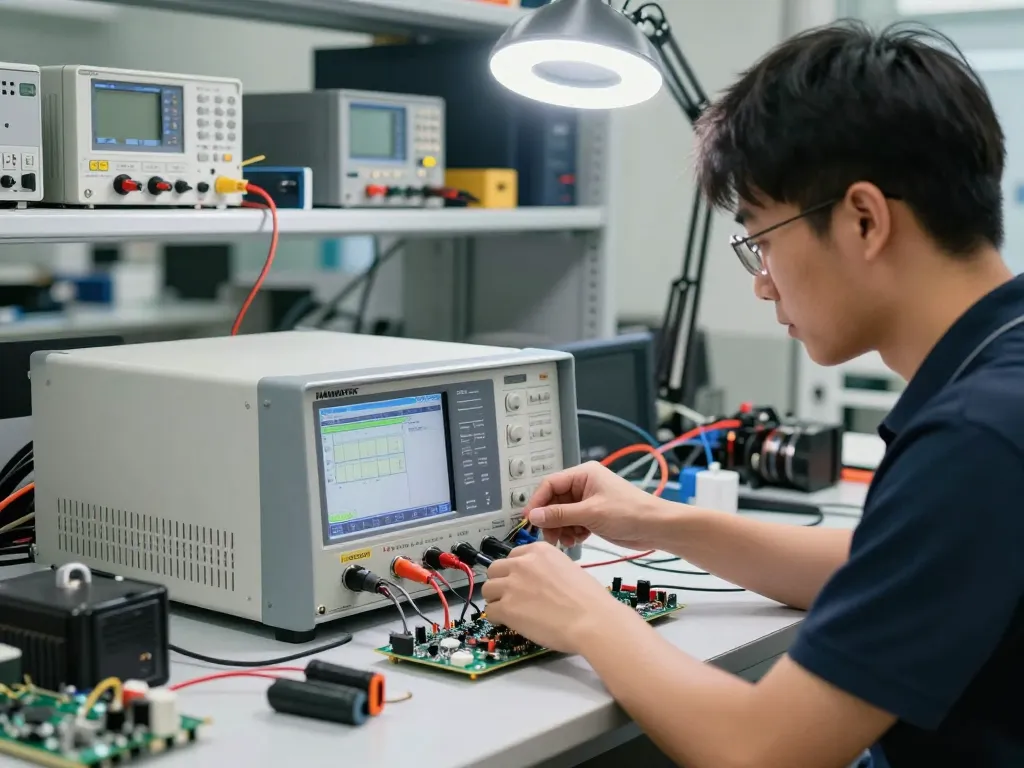
Understanding the Programmable DC Power Supply
In today’s rapidly evolving technological landscape, the demand for advanced electronic testing and research tools is at an all-time high. One of the standout devices meeting this demand is the programmable DC power supply, specifically the HANMATEK® HM310T model. This device is pivotal for professionals and hobbyists dedicated to precision and efficiency in their projects, offering features that distinguish it from standard power supplies.
What is a Programmable DC Power Supply?
A programmable DC power supply is an electronic device that delivers regulated voltage and current, which can be adjusted via software control or directly on the unit. Unlike traditional power supplies that may have fixed outputs or limited adjustments, programmable power supplies allow users to set specific voltage and current levels, automate tests, and store settings for future use. This flexibility is invaluable in environments such as laboratories, research facilities, and production lines, where precise measurements are critical.
Key Features of the HANMATEK® HM310T
The HANMATEK® HM310T combines user-friendliness with advanced technology. Some of its key features include:
- Adjustable Output: Provides voltage output from 0 to 30V and current output up to 10A, suitable for a wide range of applications.
- Memory Presets: Users can store and quickly recall up to three custom settings, streamlining operations for repeated tasks.
- User Interface: A large digital display allows real-time monitoring of voltage and current, making adjustments straightforward.
- Protection Mechanisms: Integrated features such as over-voltage protection (OVP) and over-current protection (OCP) ensure device safety and longevity.
- Portability: Compact design and durable construction make it convenient for both benchtop and field operations.
Comparing Traditional vs. Programmable DC Power Supplies
The primary distinction between traditional and programmable DC power supplies lies in their flexibility and control. Traditional units typically provide basic voltage and current settings, often requiring manual adjustments. In contrast, programmable units like the HM310T offer a digital interface for precise control, automation of testing processes, and safety features that reduce the risk of damage to connected devices.
Applications of Programmable DC Power Supplies
Industries That Benefit from Programmable Power Supplies
Various industries leverage programmable DC power supplies to enhance productivity and reliability. Key sectors include:
- Electronics Manufacturing: Used for testing components and circuits in production.
- Research and Development: Critical for conducting experiments where variable voltages and currents are necessary.
- Automotive: Employed in testing battery systems and electronic components in vehicles.
- Educational Institutions: Labs in universities and colleges utilize these power supplies for student projects and training.
Common Use Cases in Research and Development
In R&D, programmable power supplies like the HANMATEK® HM310T enable researchers to simulate different electrical conditions. For instance, a researcher developing a new circuit design can easily modify voltage levels to observe how changes affect circuit behavior. This capability aids in accelerating innovation and enhancing the quality of prototypes.
Custom Applications in Electronics Testing
Electronics testing also benefits significantly from programmable power supplies. Applications can range from simple LED tests to complex battery charging protocols. The ability to store presets means that engineers can quickly switch between tests, ensuring efficiency and accuracy in their results.
User Experience and Interface Design
Evaluating User-Friendly Controls
The user interface of the HANMATEK® HM310T is designed with the user experience in mind. Controls are intuitive, ensuring that even those new to electronics can effectively operate the device.
Importance of Digital Displays and Real-Time Monitoring
Real-time monitoring is crucial for ensuring that voltage and current levels are maintained as expected. The large digital display of the HM310T allows for easy visibility of these parameters, reducing the likelihood of errors during adjustments.
Programming Custom Settings for Efficiency
Being able to program custom settings saves time in repeated tests. Users can record their frequently used configurations, making it easy to switch settings without manual recalibration for each test, thus enhancing efficiency in operations.
Safety Features and Protections
Understanding Over-Voltage Protection (OVP)
Over-voltage protection is a critical feature in programmable power supplies. It automatically shuts off the supply if voltage exceeds set limits, protecting sensitive electronic components from damage.
The Role of Over-Current Protection (OCP)
Similarly, over-current protection prevents excessive current from flowing through devices connected to the power supply. This ensures safety during experimentation and testing, minimizing the risk of failure or accidents.
Best Practices for Safe Usage
To maximize safety when using programmable power supplies, users should adhere to best practices such as checking connections before powering on, regularly calibrating the unit, and ensuring that the output settings are appropriate for the connected devices.
Future Trends in Power Supply Technology
Emerging Technologies in Programmable Power Supplies
As technology evolves, so do the capabilities of programmable power supplies. Features such as integrated IoT connectivity and enhanced software interfaces for remote management are on the horizon. This advancement will provide users with more comprehensive control and monitoring options.
Anticipated Developments for 2026 and Beyond
By 2026, we can expect significant improvements in power efficiency and smart technologies in power supply systems. Devices will likely become more compact, yet more powerful, offering greater functionality while maintaining ease of use.
Adapting to Market Needs and User Expectations
The industry must continually adapt to meet the growing expectations of users. This includes enhancing interfaces, expanding compatibility with new technologies, and ensuring that products are robust and versatile enough for diverse applications.
What is a programmable DC power supply?
A programmable DC power supply allows users to adjust and control voltage and current levels electronically, suitable for applications in various fields including R&D, electronics testing, and manufacturing.
How does the HANMATEK® HM310T compare to competitors?
The HM310T stands out among its competitors due to its combination of reliability, user-friendly interface, and protective features, which are often more advanced than those found in similar products.
What industries commonly use programmable power supplies?
Industries such as electronics manufacturing, automotive, telecommunications, and education increasingly rely on programmable power supplies for their essential testing and development processes.
How do safety features enhance user experience?
Safety features such as OVP and OCP significantly enhance the user experience by minimizing the risk of damage to both the power supply and connected devices, fostering a more secure testing environment.
What advancements can we expect in power supply technology?
Future advancements are likely to include improved connectivity options, more user-friendly interfaces, and enhanced power efficiency, allowing for greater application versatility and ease of use.